
Here's what nobody tells you about birth control and pleasure
Starting hormonal birth control is a practical choice. It's also a full-body experiment you didn't exactly consent to. Your cycle vanishes, your skin clears, your cramps lighten. And somewhere in there, your orgasms might feel different. Not bad necessarily. Just... different. Less intense, maybe. Harder to reach. Or weirdly easier but less satisfying at the finish line.
That's not you imagining things. That's your brain and body responding to a new hormone profile. And it matters because nobody warns you about it.
Why birth control changes orgasm intensity
Hormonal contraceptives work by suppressing ovulation, which means they're constantly signaling to your endocrine system: "No surge of estrogen and progesterone this month." Your body adapts by running on a flat, lower baseline of both hormones instead of the cyclical peaks and valleys you had before.
Here's what that does to pleasure:
Lower baseline dopamine during arousal. Dopamine is the neurochemical that drives desire and the satisfaction of reaching orgasm. With birth control flattening your hormone curves, your brain produces less dopamine in response to stimulation. Result: arousal might feel muted, and the orgasm itself might feel less explosive.
Changes to genital blood flow. Estrogen supports vasocongestion. the process where blood rushes to your genitals during arousal. Lower average estrogen means slower, less dramatic blood pooling. Your clitoris still swells, but it might take longer and feel less pronounced.
Shifts in sensation sensitivity. Some people on hormonal birth control report that their clitoris feels less responsive or that they need more direct, sustained stimulation to reach the same intensity they had before. Others describe a blunting of sensation across their body generally.
Reduced lubrication. Cervical mucus and vaginal lubrication are estrogen-dependent. Lower estrogen often means you need lube, even if you didn't before. Less lubrication can reduce friction and the sensations that go with it.
Here's the part that gets overlooked: this is completely normal. It's not a sign that your birth control is the wrong choice. It's not a sign that something is broken. It's an adaptation.
The dopamine question: is it all neurochemistry?
Sometimes yes, sometimes no. If your orgasm intensity dropped sharply within the first three months of starting birth control, it's probably hormonal. Your body is acclimating to a new chemical environment.
But if the shift happened gradually or if intensity comes and goes, look at the other stuff happening in your life. Stress tanks dopamine. So does depression, poor sleep, relationship friction, and being on certain antidepressants. Birth control didn't create those conditions. It just means your nervous system has less hormonal cushion to absorb them.
The helpful thing to know: even when the cause is hormonal, the solution isn't to stop taking birth control. The solution is to adjust how you approach pleasure.
How lemon vibrators work differently when your baseline changes
This is where lemon sexual toys, specifically air-suction clitoral vibrators like the Lem, become genuinely useful. Here's why.
Traditional vibrators work by delivering mechanical oscillation to the clitoris. That works great when your sensitivity is high. When birth control has lowered your baseline responsiveness, you might end up chasing sensation. You turn up the intensity, but it still feels distant. You use it longer, but the finish line keeps moving.
Lemon clitoral vibrators work differently. They use gentle suction combined with pulsing patterns to stimulate the clitoris and surrounding tissue in a way that feels more like the natural buildup of arousal than pure vibration. No harsh rumbling, no numb-inducing buzz.
What does that mean practically? You're working with your dopamine levels instead of against them. The Lem's patterns can build sensation gradually, which actually aligns better with how your brain is processing arousal on a lower dopamine baseline. Gentler stimulation, accumulated over time, often reaches intensity more reliably than intense stimulation reaching for it instantly.
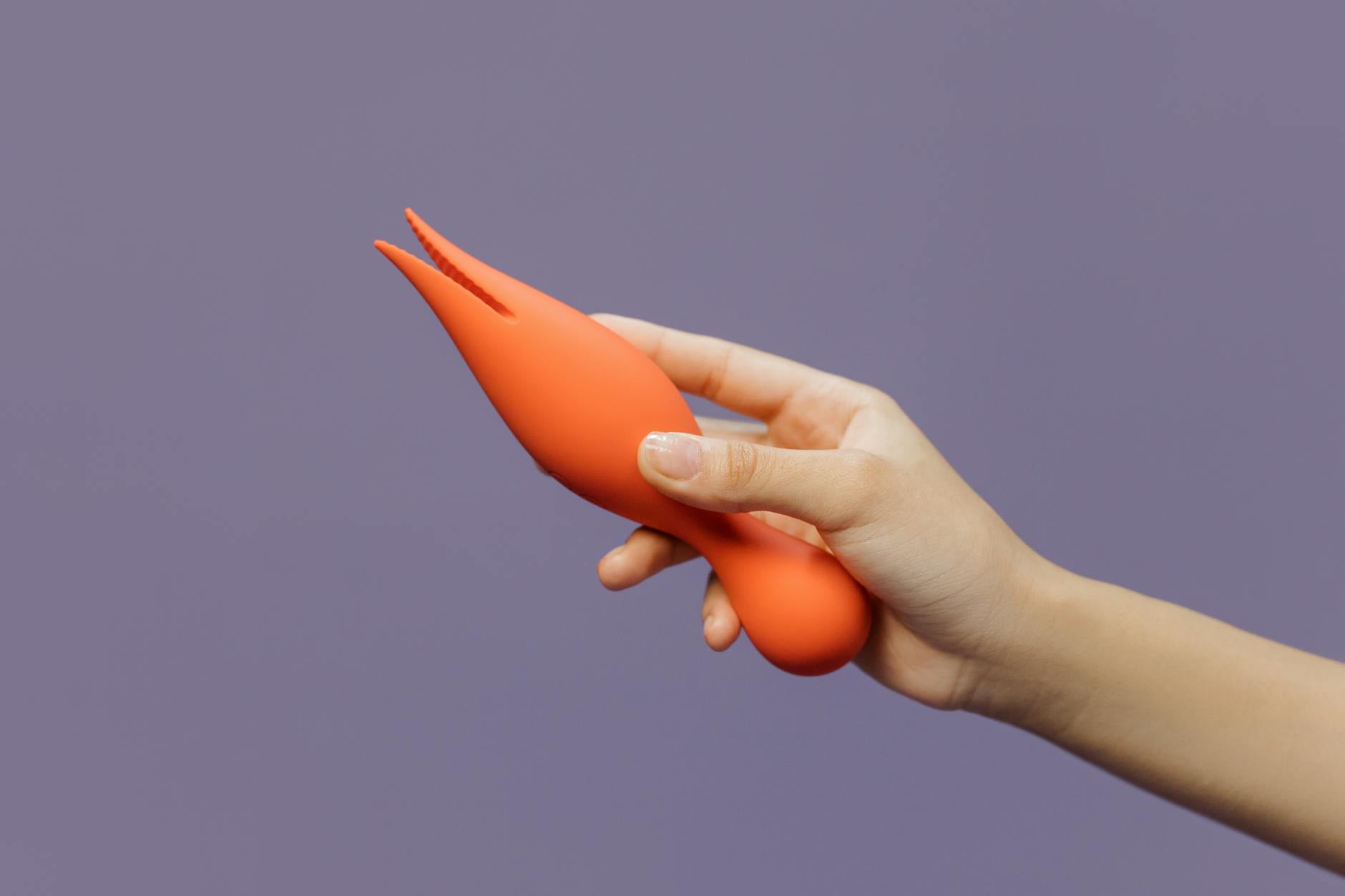
Photo by cottonbro studio on Pexels
Three concrete adjustments for pleasure on birth control
1. Start with longer warm-up time. If your arousal is flatter, give it more runway. Fifteen minutes of foreplay or self-touch before introducing a toy isn't excessive. It's actually aligning with your neurochemistry. Your dopamine levels need time to build. Rushing it just frustrates you.
2. Use water-based lube even if you don't think you need it. The issue isn't whether you're actually dry. The issue is that lubrication affects sensation and ease. Adding lube reduces friction-based irritation and lets you use the Lem for longer without discomfort. More time means more sensation accumulation.
3. Experiment with pattern sequences rather than intensity alone. Most clitoral vibrators, including the Lem, have multiple patterns. When you're on birth control, skipping around between patterns every two or three minutes can actually sustain arousal better than staying on one intense setting. It keeps your nervous system engaged instead of adapted.
The partner conversation (if there is one)
If you're with someone, this is worth naming directly: "My birth control has changed how my arousal builds. It's not a reflection on you or how attracted I am. It means we might need to adjust timing or approach."
Many partners interpret dimmed responsiveness as rejection. It's not. It's a physiological shift that you both can work with.
A lemon vibrator becomes a useful tool here too. Not as a replacement for intimacy, but as a translator. If your partner has been used to seeing you reach orgasm in a certain way and on a certain timeline, introducing a tool that recalibrates that entire conversation. Suddenly the focus isn't on speed or intensity. It becomes about exploration and what feels good right now, on your current body, with your current hormones.
When does this stabilize?
Most people see their arousal and orgasm response adapt within three to six months of starting birth control. Your body finds a new equilibrium. Some people then report that intensity comes back, just at a slightly different rhythm than before. Others find that the change is permanent for them, and they've simply reworked their expectations.
Switching birth control methods sometimes helps. The Pill and the patch hit your body differently than an IUD. But making that change for orgasm intensity alone isn't usually the move. You're likelier to find relief by shifting how you approach pleasure.
The bigger picture: you're not broken
Orgasm intensity doesn't have a fixed setting. It changes with hormones, stress, age, partner dynamics, body image, sleep, hydration, and a dozen other things. Birth control is just one variable in a much larger equation.
What matters is that you notice the change and adapt instead of assuming something is wrong with you. A lemon clitoral vibrator, whether it's the Lem or another suction toy, gives you a specific tool that works well for lower baseline arousal. But the real power is in giving yourself permission to explore what pleasure looks like now, rather than chasing what it looked like before.
Frequently asked questions
Can birth control permanently reduce my orgasm intensity?
For most people, no. Within six months of starting, your body adapts and arousal typically bounces back to a new baseline. Some people find intensity is slightly lower long-term, but most regain most of what they lost. If it's been over a year and nothing has shifted, talk to your prescriber about whether a different formulation might work better for you.
Does switching to a lower-dose birth control pill help?
Sometimes. Lower-dose pills mean slightly higher average hormone levels than ultra-low-dose formulations, which can help some people. But this isn't universal. Some people feel no difference. Others find that any hormonal method affects them similarly. This is a conversation to have with a doctor who knows your history.
Will a lemon vibrator work immediately, or does it take adjustment?
Most people notice a difference within a few sessions, but full adjustment takes time. Your nervous system is used to a certain type of stimulation. Air-suction vibrators like the Lem feel different from traditional vibrators. Give yourself at least five or six uses before deciding whether it's the right tool for you.
Is it normal for orgasms to feel less satisfying even if I'm reaching them faster?
Completely normal. Intensity and satisfaction aren't the same thing. You might reach orgasm in five minutes but feel like you hit a ceiling instead of a peak. That usually means your dopamine and arousal buildup need more time, even if your body is responding to stimulation. Slower, longer sessions often feel more satisfying than quick, intense ones when you're on birth control.
Should I stop taking birth control to get my pleasure back?
That's a call only you and your doctor can make. But know that orgasm intensity alone isn't usually reason enough to stop a contraceptive that's otherwise working for you. There are usually better tools. That said, if birth control is affecting your mood, libido across the board, or quality of life in other ways, those are legitimate reasons to explore alternatives.
Can I use a lemon vibrator alongside my current birth control without issues?
Yes. Using a clitoral vibrator doesn't interact with birth control. It's a physical tool, not a supplement or medication. Just follow basic hygiene: clean your toy before and after use, use water-based lube if you're using silicone, and listen to your body if any irritation appears.
The takeaway
Birth control changes how your body processes arousal and orgasm. That's real and worth acknowledging instead of pushing through. A lemon clitoral vibrator is one useful adaptation when your baseline shifts. More importantly, it's permission to stop comparing your pleasure now to your pleasure before, and instead figure out what works for this version of your body and chemistry.
If you're struggling with pleasure changes after starting birth control, reach out. We're here to help you rebuild what works for you right now.