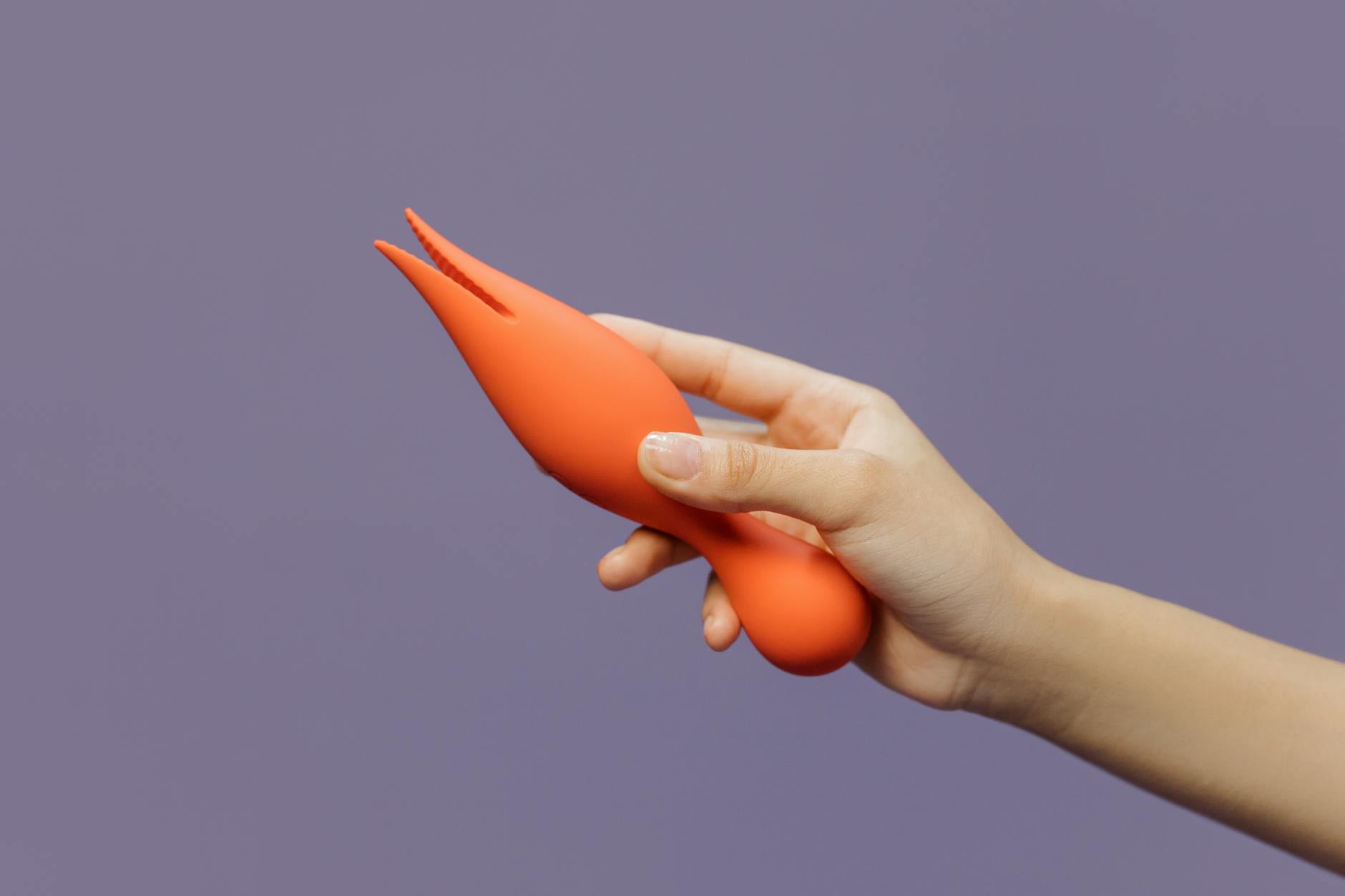
How Lemon Vibrators Help When Returning to Partnered Sex After a Long Gap
Whether it's been weeks, months, or years, restarting intimacy feels different. Here's how a lemon sucker can rebuild confidence, ease the awkwardness, and help you both find your rhythm again.
You haven't had sex in a while. Could be three months, could be two years. Could be because of work, illness, a relationship break, a kid's sleep schedule, grief, or just the slow fade that happens when life gets loud. The reason matters less than the feeling: anticipation mixed with dread. Will it still work? Will they still want me? What if it's awkward? What if I've forgotten how?
Here's the thing nobody tells you clearly: restarting partnered sex after a gap is not like riding a bike. It's more like learning to dance with someone after you've both been dancing alone. Your bodies need to remember, your minds need to calm down, and the pressure to perform perfectly makes everything harder. This is where a lemon clitoral vibrator becomes genuinely useful.
Time away from partnered sex doesn't damage your capacity for pleasure. Your clitoris doesn't atrophy. Your nerves don't forget how to fire. What actually happens is psychological and muscular, and both are fixable.
First, the mental load: your brain has spent weeks or months not expecting sex. It's not aroused in anticipation. You might be anxious instead. Anxiety is the enemy of arousal, and arousal is the enemy of anxiety. They compete for the same real estate in your nervous system. When you come back to your partner after time away, that anxiety often wins, and nothing shuts down desire faster than pressure.
Second, the physical reality: if you haven't been having partnered sex, you probably haven't been self-pleasure much either, or your routine has changed. Your pelvic floor muscles may be tighter. Your arousal patterns may feel different. Stimulation that used to feel good might feel too intense now, or not intense enough. Your body needs a reminder, not a performance.
A lemon clitoral vibrator is designed for precision and consistency. Unlike a hand or a partner's touch, which varies in pressure and rhythm based on fatigue, distraction, or the desire to please, a vibrator delivers exactly the same sensation every time. That consistency is calming when you're anxious. It's also a permission structure: you're not relying on your partner to get you there, so there's no pressure to perform, and they're not tired or frustrated by what takes time.
More than that, a lemon sucker using suction technology works differently than other toys. It doesn't require friction, so it feels gentler on sensitive tissue that may not have been stimulated in a while. It builds sensation slowly, which gives your nervous system time to shift out of anxiety mode and into arousal mode. And because it's quiet and discreet, you can use it with a partner without the whole experience feeling clinical or performance-based.
Before you even think about partnered sex, solo time matters. Spend a few sessions with your lemon vibrator learning how your body responds now. This isn't for show. This is data gathering. Does suction feel good? Do you need a longer warm-up than you used to? Is there a pattern or setting that feels best? What intensity can you handle without discomfort?
Tell your partner you're doing this. Not as a hint that they should join, but as transparency. Most partners find this genuinely hot because it signals that you're taking your own pleasure seriously. And paradoxically, that removes pressure.
When you do come back to partnered sex, introduce your lemon vibrator as part of foreplay, not as a replacement. Use it during oral or manual stimulation. Let your partner hold it while they touch you. The toy isn't there because they're not enough. It's there because it removes the cognitive load from both of you. Your partner doesn't have to worry about whether they're doing it right. You don't have to worry about taking too long. The vibrator handles the mechanics, and you both focus on connection.
When you've been away from sex, shame and self-consciousness often show up uninvited. Your body might feel different. You might feel out of practice. You might worry that your partner has lost interest or that you've lost interest in them. These thoughts are normal and they're liars.
Honest conversation helps here. Not a heavy talk, but a real one. "I'm a little nervous about this" is a complete sentence. Most partners will say something like "Same" or "I get it." That mutual acknowledgment of awkwardness actually kills a lot of the awkwardness. You're not starting from a place of pretending everything is fine. You're starting from a place of mutual reality.
The lemon vibrator helps with the mental part because it gives you something external to focus on besides your own body anxiety. Instead of lying there thinking "Do I look okay right now?", you're paying attention to sensation. Your nervous system downshifts. Your partner sees you enjoying yourself, which actually increases their desire.
Here's the misconception: couples who use toys are insecure or their sex is broken. That's backwards. Couples who use toys are generally more curious, more communicative, and more willing to problem-solve together. A lemon clitoral vibrator isn't a band-aid on a broken relationship. It's a tool for people who want to rebuild connection.
Start small. You don't need to turn it into a whole production. Maybe you're lying in bed, kissing, and your partner asks if they can use it on you. That's it. No script, no performance. If it feels good, you keep going. If it doesn't, you try something else. The toy is flexible. Your bodies are flexible. The whole point is to find what works now, not what worked before the gap.
One thing I've noticed clinically: when couples reintroduce toys after time apart, they often laugh. There's something about the slight novelty and the relief of finally touching each other that breaks the tension. Let that happen. Laughter during sex is not a sign that something's wrong. It's a sign that you're both relaxed enough to be human.
You might feel amazing in week two and awkward again in week four. That's normal. Arousal isn't a light switch that flips back on permanently. It's more like adjusting your body's sensitivity settings after time away. Some days your nervous system is ready. Some days it's not. Your lemon vibrator doesn't care. It's consistent either way.
If you find after a few weeks that partnered sex still feels uncomfortable or pressured, that might be a sign that something else is going on beneath the surface. Maybe resentment about why the gap happened. Maybe a shift in your relationship that needs talking through. The vibrator can't fix that. But a willingness to restart, to be honest about awkwardness, and to prioritize your partner's pleasure alongside your own? That's what actually rebuilds intimacy.
You're not back when sex feels the way it did before the gap. You're back when it feels good enough that you want to do it again. Anticipation should feel a little exciting, not entirely terrifying. Your body should recognize sensation without feeling defensive. And you should be able to laugh at yourself when things are awkward, because awkward is actually part of returning. It means you're trying.
A lemon clitoral vibrator becomes less essential as you find your rhythm again. But many couples keep it around. Not because they need it, but because it works. After a long gap, that's enough.