Here's what actually happens when you're trying too hard
Your partner is waiting. You're timing yourself. You're wondering if you're taking too long. Your brain is running a quiet clock in the background. And guess what? That clock is the enemy of orgasm.
Orgasm isn't a destination you can force yourself to by sheer will. It's a neurological state that requires your brain to fully relax into sensation. The moment you add pressure, expectation, or a mental checklist, you've switched systems. Your nervous system moves from parasympathetic (rest and digest, the state where pleasure lives) into sympathetic (fight or flight, the state where performance anxiety lives). Those two systems can't run at the same time.
Why the pressure exists in the first place
Some of it comes from partners who mean well but don't understand that arousal doesn't have an ETA. Some of it comes from watching porn, where orgasms arrive in 7 minutes flat because that's what makes for good video. Some of it comes from years of feeling like your body is the problem when really the situation was the problem.
But honestly? A lot of it comes from you. From the belief that if you can't come easily, something is wrong with you. That if it takes time, you're broken. That your partner will get frustrated if you're not on their timeline. None of that is true, but the pressure is real.
What changes when you use a lemon vibrator
A lemon clitoral vibrator shifts the whole dynamic. Not because it's magic, but because of how your brain perceives using it.
When you're with a partner and they're trying to make you come, there's an invisible audience in the room: the expectation. Even when it's loving and well-intentioned, you're hyperaware that someone else's pleasure and sense of competence is tied to whether you finish. That's a lot of psychological weight.
When you're using a lemon vibrator, you're in control. You set the pace. You choose the intensity. You decide when to stop. That autonomy alone shifts your nervous system. Suddenly you're not performing. You're exploring.
The clitoral suction design of a lemon vibrator works differently than traditional vibrators too. Instead of the direct mechanical pressure that can feel like you're chasing something, suction creates a more diffuse, sustained stimulation. Your body doesn't have to work as hard to reach sensation. That means less forcing, less performing, more receiving.
The pressure paradox: less effort, stronger sensation
Here's the counterintuitive part. When you stop trying to have an orgasm and instead focus on sensation, orgasms often become easier. Not because you're magically more relaxed (though you are), but because your nervous system can actually process pleasure instead of processing panic.
With a lemon vibrator, you can spend time at lower intensities without the guilt of "this is taking too long." You're not racing. You're not monitoring your progress. You're just following where sensation leads. And weirdly, that's where most people find out their body is way more responsive than they thought.
If you're with a partner, here's how to reframe it
The conversation you need to have isn't "I'm broken, please fix me." It's "I want to explore my own pleasure first so I know what I like, and then we can play together." That's collaborative. That's hot. That's also honest.
Many couples find that using a lemon vibrator together actually deepens connection. Your partner gets to watch you relax into pleasure without the weight of performing for them. They learn what makes your body respond. And you get to practice receiving without the pressure of "proving" anything.
The other thing that helps: explicitly releasing your partner from responsibility for your orgasm. Tell them. Say out loud: "I don't expect to come from this, and that's fine. I just want to feel good and spend time with you." That sentence removes so much pressure from both of you.

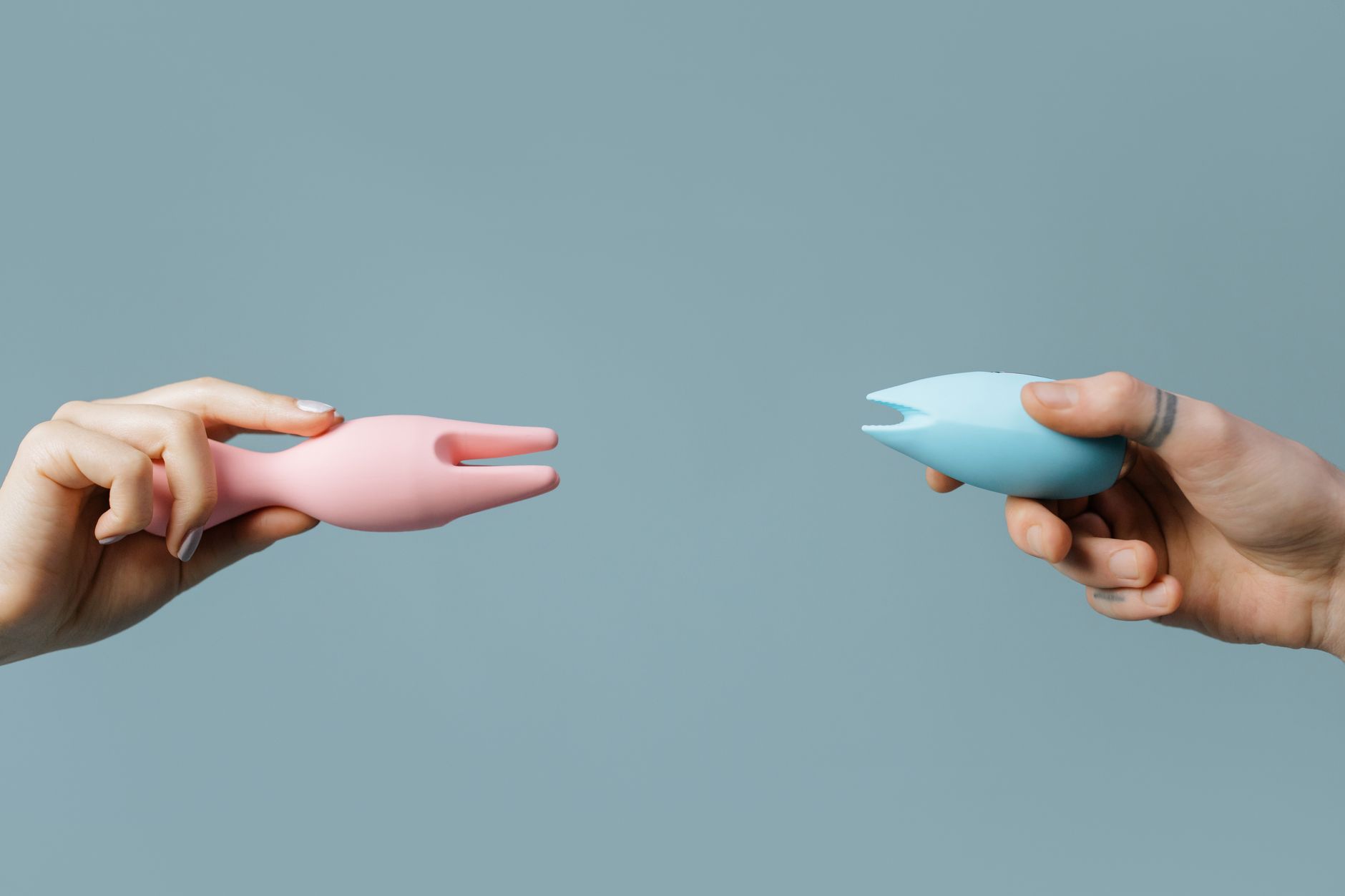
Photo by cottonbro studio on Pexels
What happens to your nervous system when pressure drops
When you remove the expectation, your body has permission to respond naturally. Your cortisol levels drop. Your heart rate can settle into arousal instead of staying in alert mode. Blood flow goes where it needs to go instead of getting redirected to your large muscles (the fight or flight response).
With a lemon vibrator, you're also controlling your own stimulation, which means you can adjust the moment something feels off. You're not waiting for a partner to read your mind or worrying about communicating what you need. That autonomy is profoundly relaxing.
The long game: retraining your nervous system
If you've spent years feeling pressure around orgasm, your nervous system might have learned to brace itself when sex happens. Using a lemon vibrator solo is actually a form of nervous system retraining. You're teaching your body: "Here, this is a safe place to let go. There's no performance here, just sensation."
Do this a few times and something shifts. When you return to partnered sex, you carry that learned relaxation with you. Your body has evidence that pleasure without pressure is possible.
The role of communication, not shame
If you've been avoiding sex because of pressure, that's important information. It doesn't mean you're low desire. It means your nervous system is protecting you from an environment that doesn't feel safe. That's actually your body being smart.
The work isn't forcing yourself to come. It's creating an environment where you can relax. For some people, that means solo exploration with a lemon vibrator. For others, it means setting boundaries with a partner about what sex looks like. For many, it means both.
Real talk about expectations
Here's something I tell couples constantly: orgasm is not the metric for good sex. Pleasure is. Connection is. The fact that you're present and engaged is. If you come, great. If you don't, that doesn't mean the sex was bad. It means your nervous system wasn't in the right state. And that's fixable, but not by forcing it harder.
A lemon vibrator helps because it removes the forced part of the equation. You can explore sensation without an agenda. And often, when you remove the agenda, everything works better.
FAQ: Orgasm pressure and lemon vibrators
Do I actually have to try less hard to have an orgasm?
Yes, but not in the way you think. You don't have to try less hard to feel pleasure. You have to try less hard to have an orgasm, which is different. Pleasure is available at any intensity, any pace. Orgasm requires your nervous system to be in a specific state. That state doesn't come from effort. It comes from safety and relaxation.
What if using a vibrator doesn't give me an orgasm either?
Then you've learned something valuable: the pressure isn't the only variable. There might be something else going on. A medication side effect, a hormonal shift, relationship tension, or just the fact that your body doesn't orgasm easily and that's completely normal. That's when you talk to a provider or a sex therapist, not when you try harder.
Can my partner feel hurt if I use a lemon vibrator alone?
Only if you frame it that way. If you say "You're not making me come so I'm doing this myself," yes, that stings. If you say "I want to learn what I like so I can share that with you," that's a partnership conversation. The difference is huge.
How long should I use a lemon vibrator before it changes things?
Some people notice a shift in one session. Others need a few weeks of solo exploration to feel permission to relax. There's no timeline. You're retraining your nervous system, not following a protocol.
Is it normal to still feel pressure even with a vibrator?
Completely. If you've spent years in performance mode, your body might bring that habit into solo play too. You might find yourself timing it or wondering why you're not coming faster. That's when you pause and ask: "What would happen if I stopped timing myself?" Often, everything changes when you do.
What if I come easily with a lemon vibrator but not with my partner?
That tells you the difference is about safety and autonomy, not your body. That's actually good news because it's fixable. You can bring that same permission and relaxation into partnered sex. It takes communication and practice, but your body just proved it's capable.
The real work starts here
Using a lemon vibrator isn't a magic fix for orgasm pressure. But it is a way to separate pleasure from performance. To show your nervous system what relaxation feels like. To remind yourself that your body isn't broken. It just needs permission to let go.
If you're carrying years of pressure around this, that's worth unpacking. Sometimes with a partner, sometimes with a therapist. Because shame and expectation are powerful, and they deserve real attention. A lemon vibrator is a tool. A good one. But the deeper work is yours to do.
Start by giving yourself permission to not come. Weird advice, I know. But that permission is often what opens the door.