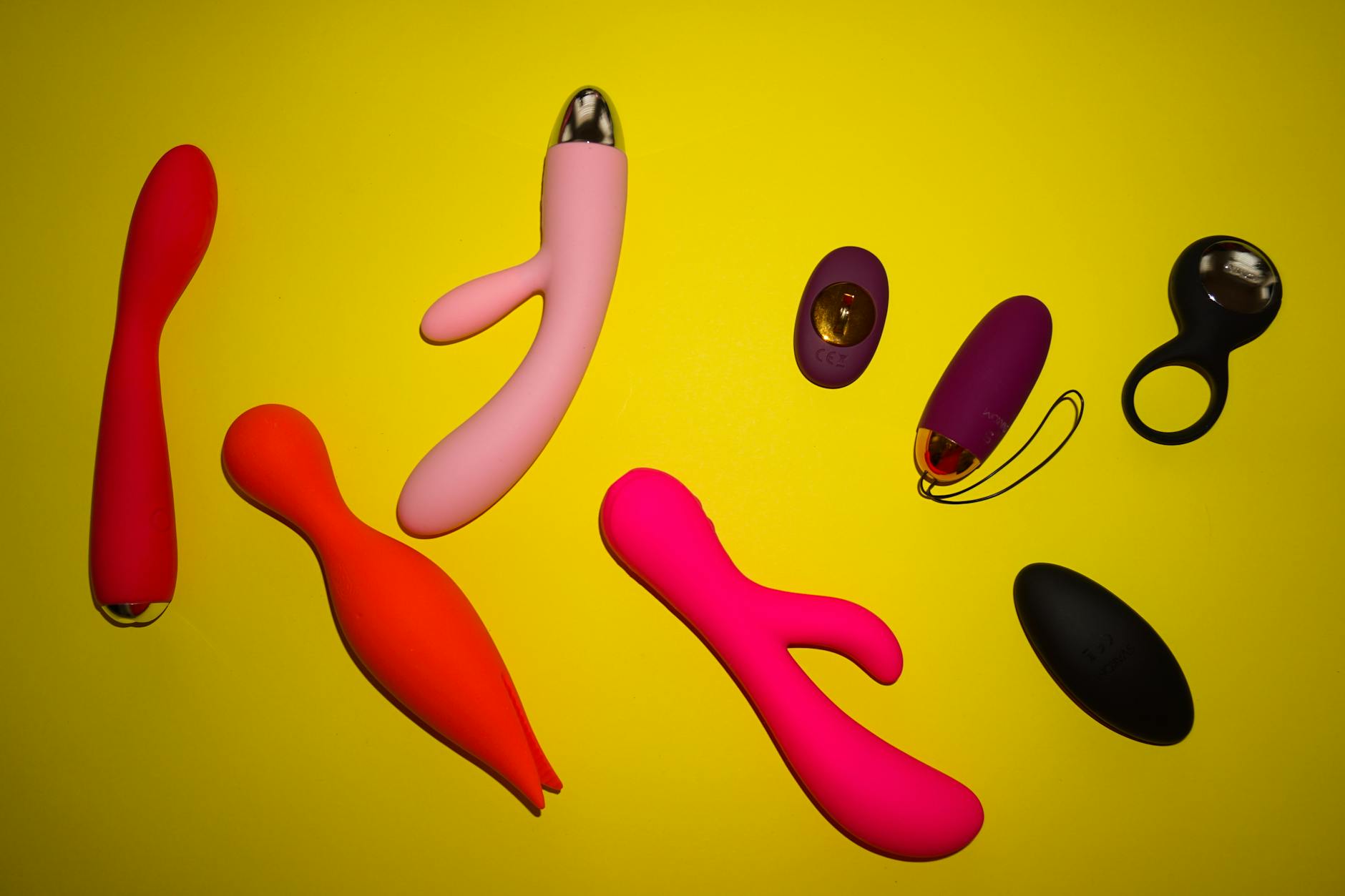
How Lemon Vibrators Help With Reduced Sensitivity After Years of Numbing Touch
When your nerves stop responding the way they used to, suction stimulation works where traditional vibration fails. Here's why pattern trumps power, and how to wake up sensation you thought was gone.
Years of the same sensation, the same pressure, the same rhythm will flatten a nerve like a footpath. Your body stops hearing what it's being told because the message hasn't changed since the last thousand times. This isn't broken. It's adaptation. And it's actually fixable in ways most people never discover.
If you've spent years with a partner whose touch has become as predictable as background noise, or if you've relied on one type of stimulation so long your body stopped responding, you know the frustration. Turning up the intensity doesn't help. Faster doesn't work. You need something that actually surprises your nerves again.
That's where lemon vibrators and clitoral suction technology enter the conversation. Not because they're stronger, but because they work on a completely different principle than the vibration you've already adapted to.
Your nervous system is built to ignore the familiar. This is called habituation, and it's actually a survival feature. If you wore a heavy sweater every day, you'd eventually stop noticing its weight. Your brain would stop sending the "there's pressure on your shoulders" signal because the stimulus hasn't changed.
Sexual sensation follows the exact same pattern. A vibrator at a fixed frequency, even a high-quality one, eventually becomes background noise to your nervous system. The nerve endings stop firing as intensely because there's no novelty to report. Researchers call this the "pulsatile response." Your clitoris has adapted to the rhythm.
Turning up the power doesn't reset this. In fact, it often deepens the problem. Higher intensity on the same frequency compounds the numbness because your nerves are already habituated to that type of stimulation.
Clitoral suction, the technology behind lemon vibrators, works on an entirely different neural pathway than traditional vibration. Instead of oscillating pressure, suction creates a gentle vacuum and release cycle. This mimics the sensation of oral stimulation more closely than any buzzing ever could.
When your nerves encounter a new type of stimulus pattern, they light up. It's not novelty for the sake of novelty. It's a genuine difference in how the stimulus travels through the sensory chain. Your touch receptors respond to the rhythmic vacuum differently than they do to a vibrating motor.
Many people report that switching from a traditional vibrator to a clitoral suction device like a lemon vibrator feels shocking at first. The sensitivity can actually feel too intense initially. That's your nervous system waking up. The pathways you'd numbed are suddenly receiving clear signals again.
One major advantage of lemon vibrators is the range of patterns available. Most have 3 to 7 distinct rhythms, and the ability to adjust both intensity and pattern within those cycles.
If you've adapted to a single rhythm, switching patterns every 2 to 3 minutes prevents re-habituation. This is why people with reduced sensitivity often find success not by using stronger devices, but by rotating through patterns. Your nervous system re-engages because the input keeps changing.
Start with the gentlest pattern on a lemon clitoral vibrator. Many people assume they need high intensity because they've lost sensation, but that's backwards. Start low, give yourself 3 to 5 minutes on each pattern, then switch. You're retraining your nervous system to notice, not overwhelming it with power.
If your body has learned to expect a certain type of touch, switching devices without adjusting your warm-up phase will feel worse, not better. Your arousal response is also habituated. A lemon sucker requires a different kind of engagement during warm-up than a traditional vibrator does.
Budget 15 to 20 minutes for arousal before using any new device, especially if you're coming from years of numbed sensation. Use your hands, use your imagination, let your mind catch up with what you're about to try. The anticipation actually primes your nervous system differently than jumping straight into sensation.
Many people find that combining gentler manual stimulation with lemon vibrator patterns reawakens sensation faster than the device alone. You're giving your nervous system a bridge between what it knows and what you want it to discover.
Once you've spent weeks or months rebuilding sensation with a lemon clitoral vibrator, consistency prevents re-adaptation. This doesn't mean daily use, but it does mean regular use with pattern variation.
Many of my clients who've dealt with touch numbness find that using their device 3 to 4 times per week, rotating patterns and intensities, keeps that sensitivity alive. Your nervous system remembers what it learned, but it will drift back into numbness if the stimulus becomes predictable again.
If you're in a partnered situation, this is also where communication shifts. Your partner needs to understand that you're not bored with them. You're retraining your sensory response, and that sometimes means solo time with tools that can vary in ways a human hand simply can't.
One important reality: the sensation that comes back often feels different than you remember. That's normal and actually good. You're not trying to recreate the original feeling from years ago. You're building a new sensory relationship with your body as it is now.
Some people report that sensation returns first in unexpected places. You might feel a lemon vibrator's suction more intensely on the clitoral hood before the clitoris itself responds. You might notice patterns you'd assumed didn't do anything now register clearly. This is how rewiring works. It's not linear.
Be patient with the difference. The goal isn't nostalgia. It's actual, alive sensation. And that often arrives looking nothing like the memory.
Here's what most people miss: numbness isn't only physical. If you've spent years with touch you didn't really feel, your mind checked out too. You might have been going through the motions, or thinking about other things, or genuinely disconnected from the experience.
When you switch to a lemon vibrator and use pattern variation thoughtfully, part of the reset is mental. You're actively paying attention again. You're noticing. You're checking in with what your body is actually experiencing rather than assuming you know what it will be.
This mindfulness component is why some people see results faster than others with the same device. The tool helps, but your actual attention to sensation is what rewires the pathway.
Most people report noticing a shift within 2 to 4 weeks of regular use with pattern rotation. Some feel it within days if their numbness was more recent. If you've spent years with reduced sensitivity, give yourself at least 4 to 6 weeks before assuming nothing is changing. Your nervous system needs time to remember how to respond.
Yes, but start with the lowest settings and gentlest patterns. Completely numbed sensation often means your nervous system has learned to ignore standard vibration signals. Suction works on a different pathway, which is why it's often effective when traditional vibrators have failed. The key is patience and pattern variety rather than intensity.
Rotate. If you use the same lemon vibrator at the same settings every session, you risk re-habituating your nervous system. Switch patterns frequently, vary intensity week to week, and if you have access to multiple devices, alternate between them. Novelty is the active ingredient here.
Start with the lowest intensity and softest pattern. Give yourself 2 to 3 minutes to adjust. Many people find suction feels strange at first because it's so different from vibration. If it continues to feel uncomfortable after several sessions, try shortening your sessions to 10 minutes rather than 20. Your body might need more gradual introduction to the sensation.
Yes, and that's actually a good sign. If you've rebuilt sensation and now a lemon vibrator feels too intense, you've succeeded in rewiring. At that point, you're adjusting settings down, which is the opposite problem from where you started. You have control again.
Slowly, yes. Your nervous system will gradually return to its previous habituated state if you return to the same static stimulus. That's why consistency and pattern variation matter long-term. You're not trying to "fix" yourself once and be done. You're maintaining an active sensory practice.
Here's what I want to name directly. If you've spent years with touch that didn't register, there's often guilt attached. You might feel like you should just be satisfied, or that wanting something different is disloyal, or that seeking tools to rebuild sensation is admitting failure.
It's none of those things. Your body telling you it's adapted to numbness is not a character flaw. It's data. And using a lemon vibrator to rebuild sensation is an act of self-respect, not selfishness.
If you're with a partner, this is also information worth sharing. Numbness from years of the same stimulus isn't about them. It's neurology. And the solution isn't them trying harder or doing it differently. It's often you taking solo time to rewire, then bringing that renewed sensation back into partnership.
You deserve touch that you actually feel. Start with a lemon clitoral vibrator, commit to pattern rotation, and give your nervous system permission to wake up again. If you want help thinking through how this fits into your specific situation, reach out to contact us and we can talk through it.
Komisaruk, B. R., Whipple, B., Crawford, A., Liu, W., Kalnin, A., Mosier, K. (2004). Brain activation during vaginal-cervical self-stimulation and orgasm in women with complete spinal cord injury. Journal of Neurotrauma, 21(4), 425-435.
Levin, R. J. (2003). The physiology of sexual arousal in the human female. Psychiatry, 2(4), 1-5.
Berman, L., Berman, J., Feduccia, A., Groemke, A., Miles, M., Kaufman, J., Bumiller, J. (2003). Enhancing female sexual function. Current Sexual Health Reports, 1(1), 44-50.