
Let's talk about the invisible barrier
Disconnection from your body isn't laziness or low libido. It's a survival mechanism. Trauma, chronic stress, anxiety, depression, and even just years of dismissing your own needs can create a gap between your mind and your physical self. You're present but not quite here. Sex becomes a thing that happens to you, not something you experience.
Here's what matters: that gap is closeable. And clitoral vibrators like the Lemon are often the fastest tool to rebuild that bridge.
Why dissociation kills pleasure
When you're dissociated, your nervous system is operating in protection mode. Your brain has decided that feeling too much is dangerous, so it mutes sensation. This isn't a character flaw. It's your body doing exactly what it evolved to do. But it also means traditional arousal patterns don't work. You can't simply "relax and get into it" because your system isn't permitting that level of presence.
Sensation is the anchor that pulls you back into your body. Not emotional connection, not partner validation, not willpower. Physical sensation. That's why external stimulation tools matter so much here.
The neurology behind why lemon clitoral vibrators help
The clitoris has over 8000 nerve endings concentrated in a small area. When dissociation numbs general sensation, the clitoris often remains responsive because those nerves are so densely packed. The suction mechanism of a Lemon vibrator creates a specific pattern of stimulation that your nervous system registers as novel and undeniable. It's harder to drift mentally when something unfamiliar and precise is happening physically.
Your brain can ignore a vague sensation. It cannot ignore a targeted pulse. That's not being horny. That's neurology.
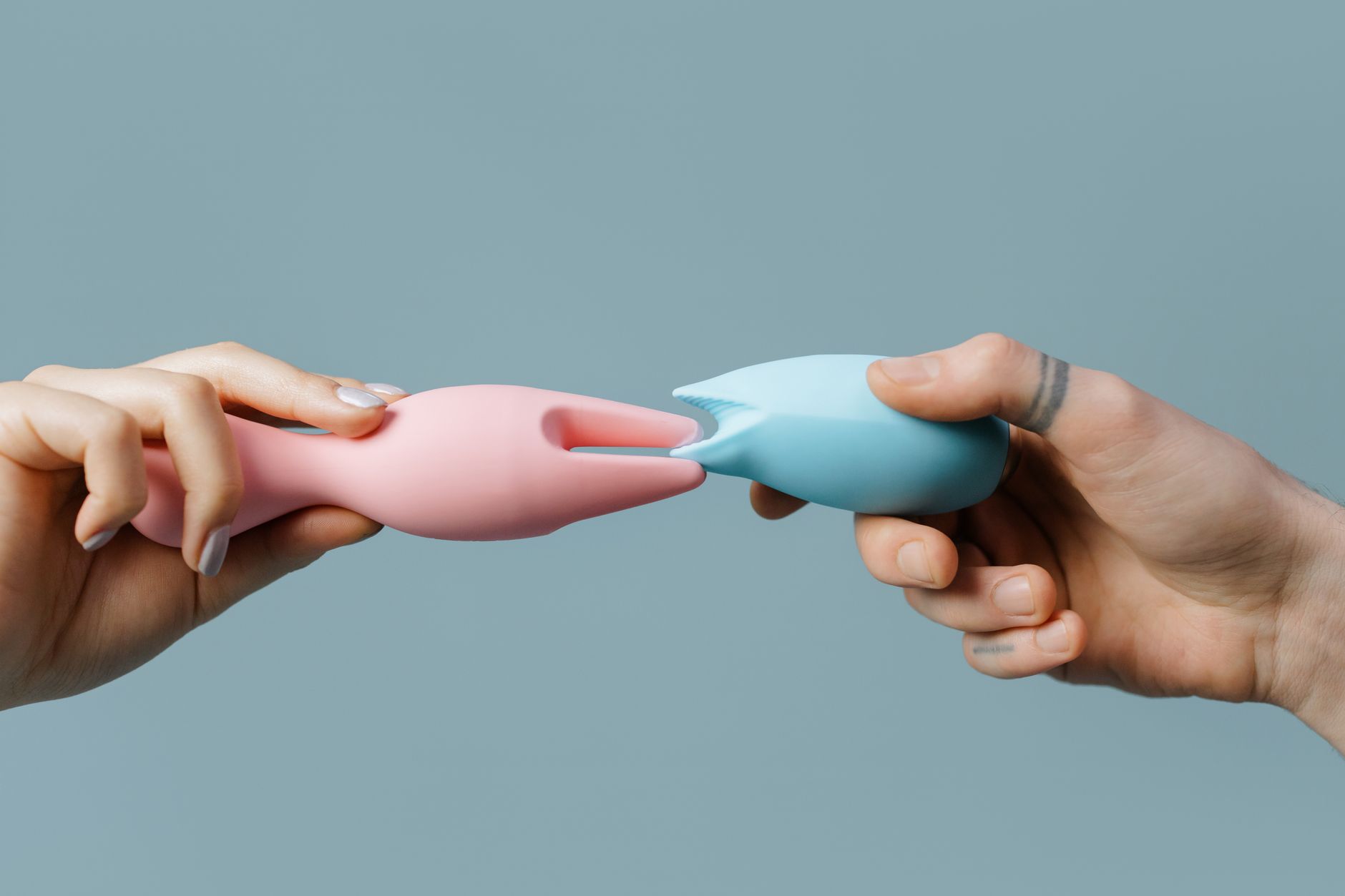
Photo by cottonbro studio on Pexels
Starting the reconnection process
If you're rebuilding sensation, go slow in ways that feel counterintuitive.
Start on the lowest setting. Not because you're fragile, but because subtlety demands attention. A gentle pulse makes your mind work harder to notice what's happening. Intensity lets you zone out. You want the opposite.
Schedule it. Spontaneity is lovely but unrealistic when you're working through dissociation. Setting a time actually helps. Your body gets permission to be present. Your mind knows this block of time is protected. No multitasking. No checking your phone.
Use it solo first. No partner watching, no performance pressure. Your only job is to notice what you're feeling. Not to feel "turned on" or to reach orgasm. Just to notice. That's it. That's the win.
The sensation mapping technique
Here's a concrete practice I recommend:
Lie down in a comfortable position. Turn on the Lemon at pattern 1 (the gentlest one). Hover it near the clitoris without touching initially. Notice the vibration in the air. What do you feel? Warmth? Tingling? Buzzing? Give it a name, even if the name is vague. "Humming." "Tingly."
Now touch it lightly to the outer labia. Same question. What's different from the air? Move it slowly up toward the clitoris. Stop every 2 inches. Check in. What's the sensation now? Is it the same as before or different? Are you present or drifting?
If you drift, pause. No judgment. Just pause and notice that you drifted. That noticing is the entire practice. You're training your brain to register absence and presence as different states.
Do this for 10 minutes maximum. Stop before you get tired of it. Exhaustion defeats the purpose.
Building tolerance for intensity gradually
Once pattern 1 becomes familiar, you won't feel like much happens. That's the moment to move to pattern 2. Not because you're bored, but because your nervous system has registered safety and is ready for a slight increase.
The same mapping technique applies. Hover. Outer labia. Gradual movement. Notice. This should take weeks, not days. Slower rebuilding is deeper rebuilding.
Many people get frustrated here. "Shouldn't I be able to go faster?" No. You're training your nervous system to trust pleasure again. That takes time. Impatience is just dissociation speaking. Stay patient with yourself.
What happens when pleasure starts to break through
At some point, maybe after three weeks or three months, you might notice something shifts. You'll be using the Lemon and suddenly realize you're here. Not in your head. Here. The sensation feels real instead of abstract. You might feel arousal building, or you might just notice warmth, or tingling that actually registers as pleasant rather than clinical.
This is not orgasm. This is presence. Celebrate it as such.
When to bring a partner in
If you have one, resist the urge to jump into partnered sex immediately. Instead, invite them to watch you use the Lemon solo. No penetration involved. They're not performing. They're just being present while you reconnect with your own body. This might feel vulnerable. Good. Vulnerability in a safe space is exactly what teaches your nervous system that intimacy is possible.
Only after you feel genuinely present during solo use should you consider bringing the Lemon into partnered play. And even then, keep the focus on your sensation, not on their pleasure or participation. This is not about being a better partner. This is about rebuilding your capacity to feel.
When numbness persists
If after six weeks of consistent practice you're still feeling nothing, talk to a mental health provider. Dissociation sometimes needs support beyond tools. Trauma therapy, somatic therapy, or even medication can shift what a vibrator alone cannot. A Lemon clitoral vibrator is a tool, not a treatment. It works best alongside other forms of care.
The truth about reconnection
Rebuilding sensation isn't linear. Some weeks you'll feel present. Other weeks you'll drift again. This is normal. Your nervous system is learning that pleasure is safe, and learning takes practice, setbacks, and patience. The Lemon doesn't do the work. You do. The Lemon just makes that work possible by giving your body a clear signal to follow home.
People also ask
How long does it take to feel reconnected to your body using a vibrator?
Timeline varies based on the root cause of dissociation, but most people notice a shift in 3 to 8 weeks of consistent practice. The key word is consistent. Using a vibrator sporadically won't rebuild the neural pathways you're working with. Aim for once a week minimum, ideally twice weekly, with the same tool and routine. Your nervous system learns through repetition.
Can dissociation prevent orgasm even with a lemon clitoral vibrator?
Absolutely. Dissociation creates a barrier to the vulnerability required for climax. If you're numb to sensation overall, your body won't release into orgasm because release requires surrender. That's why the earlier stages focus on presence, not performance. Orgasm might happen eventually, but it's not the goal. Feeling is.
What's the difference between dissociation and just having a low sex drive?
Low sex drive is the absence of desire for sex. Dissociation is the absence of the ability to be present during potential sex. Someone with dissociation might logically want to have sex or use a toy, but their body won't cooperate because the nervous system is in protection mode. Low drive is motivational. Dissociation is neurological. They sometimes coexist, but they're not the same problem.
Should I tell my partner I'm using a lemon vibrator to reconnect with my body?
If you have a partner, telling them is usually worth it, but timing matters. Frame it as something you're doing for yourself, not as a reflection of anything they're doing wrong. You might say, "I'm exploring what helps me feel more present in my body. I want to understand myself better before we explore together." This invites them into the process without making your disconnection their job to fix.
Can anxiety medications affect how vibrators feel?
Yes. SSRIs and other anxiety medications can dull sensation or make orgasm harder to reach. If you're on medication and struggling to feel pleasure, don't assume it's dissociation. Talk to your prescriber. Sometimes a dose adjustment or a different medication helps. Sometimes pairing your vibrator with techniques designed for medicated bodies makes a difference.
What if the vibration feels overwhelming instead of grounding?
That's a sign to start gentler or slower. Sometimes the nervous system needs even more time to register vibration as safe. Try pattern 1 for just 3 to 5 minutes instead of 10. Or use it over clothing initially. Your system will tell you what it needs. Listen to that signal instead of pushing through. Overwhelming sensation reinforces the belief that your body isn't safe. Gentleness teaches the opposite.
References
Dissociation, trauma response, and somatic reconnection are well-documented in clinical literature. Research from the International Society for the Study of Trauma and Dissociation (ISSTD) supports the role of embodied practice in nervous system regulation. Work by trauma specialist Bessel van der Kolk on "The Body Keeps the Score" demonstrates how sensation-focused tools help rewire survival responses. Specific research on vibration and clitoral nerve sensitivity comes from urological and sexual medicine journals, including studies on external genital stimulation patterns and arousal response. If you're working through trauma-related dissociation, pairing any tool with qualified therapeutic support yields better outcomes than tools alone.