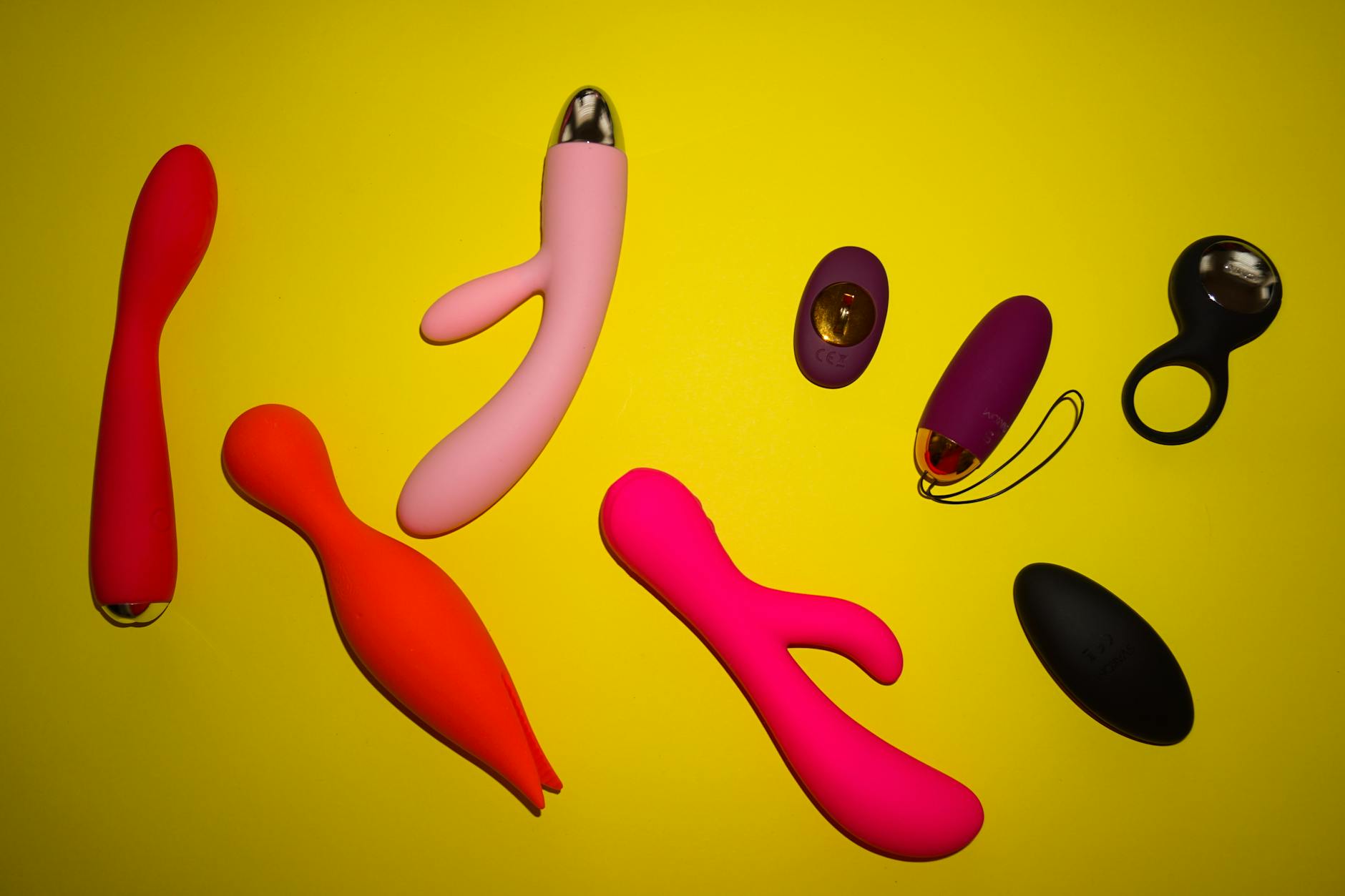
The shift from hands to a toy isn't as simple as turning it on
You know exactly what pressure feels good. You know the rhythm that works. You know how to back off when it gets too intense. Then you pick up a lemon clitoral vibrator and suddenly none of that knowledge translates.
This is completely normal. Manual stimulation and vibrator-based pleasure use different nerve pathways. They feel structurally different because they are.
Why your hands and a lemon vibrator aren't interchangeable
When you use your hands, you control three variables at once: pressure, speed, and movement pattern. You can adjust all three in real time based on what your body is telling you. You can be still. You can circle. You can pulse. You have infinite variation.
A lemon clitoral vibrator gives you different tools. Most lemon vibrators offer pattern and intensity settings, but the movement itself is fixed. Your hands create friction. A lemon vibrator (especially models using suction technology) create waves of pressure instead. That's not better or worse. It's just different.
Your nervous system notices that difference immediately. A sensation that feels amazing through manual techniques might feel weird, too intense, or not quite right through vibration. That doesn't mean the vibrator is wrong for you. It means your body is adjusting to a new signal.
Starting with the lowest setting (and actually using it)
Here's where most people stumble. You pick up a lemon vibrator, assume you know what "gentle" feels like from your manual experience, and jump to pattern 2 or 3. Then it feels overwhelming.
Start at pattern 1, lowest intensity. Every lemon vibrator has a gentler entry point than you think. Spend a full session (15-20 minutes) exploring just that baseline setting before you move up.
Your clitoris needs time to register the vibration differently than pressure. What feels like nothing on first touch often becomes quite enough within a few minutes. Patience here matters more than intensity.
The positioning difference (crucial)
When you use your hands, you probably have a preferred angle. Maybe you use your fingers directly on the clitoris. Maybe you work around the sides. Maybe you use your whole hand. You've built muscle memory around what angle creates the sensation you want.
A lemon vibrator has a specific shape. The Lem, for instance, is designed to cup the entire vulva and work through gentle suction rather than direct vibration on the clitoral tip. That means you're not going to position it the same way you use your fingers.
Spend time finding the right angle. Tilt it slightly. Move it a millimeter. Notice how small adjustments change sensation. This exploration phase isn't wasted time. It's you learning a new language your body speaks.
Why sensation might feel muted at first
Manual stimulation creates direct friction on nerve endings. You can feel exactly where the pressure is. Vibration works differently. It creates a ripple of sensation rather than a point of pressure.
If a lemon vibrator feels less intense than your hands, that's often not because it's weak. It's because your body is experiencing a different type of stimulation and hasn't learned to read it yet. The sensitivity is there. Your nervous system just needs time to integrate it.
This is why jumping straight to higher intensities doesn't help. If you can't feel pattern 1 clearly, pattern 5 won't feel better. It'll just feel overwhelming. Go slower, stay at low intensity longer, and let your body catch up.
Building a transition routine
The easiest way to shift from manual techniques is to use both. Start with your hands, warm up your body, build arousal naturally. Once you're in a good headspace (15-20 minutes in), introduce the lemon vibrator at its lowest setting.
Using your hands first removes the pressure of "making this work" with the toy. Your body is already responsive. The vibrator becomes an enhancement rather than your whole system.
Many people continue this hybrid approach long-term. There's no rule that says you have to choose. You might use your hands for foreplay and a lemon vibrator for the final push toward orgasm. Or vice versa. Or they stay separate tools for different moods.
When to add intensity (and how)
Once you've spent 2-3 sessions exploring pattern 1, you can experiment with the next level up. But here's the key: only increase one variable at a time.
Try pattern 2 at the same low intensity you've been using. Notice how that feels for a full session before you touch intensity settings. Then in another session, increase intensity while keeping the pattern the same.
This prevents sensory overload and helps you actually understand what each setting does. You'll build a mental map of the toy. That map is confidence.
The role of lubrication
With manual techniques, your body's natural lubrication usually handles everything. With a lemon vibrator, especially in the early transitions, adding a water-based lubricant can help. It reduces friction between the toy and your skin, which can make sensation feel clearer rather than chaotic.
You might not need it. But if you're finding the vibrator uncomfortable, this is often the easiest fix before you assume the toy isn't right for you.
What happens to arousal when the tool changes
Some people find that their arousal builds more slowly with a vibrator than it does with hands. That makes sense. You've trained your nervous system to respond to a specific input. When you change the input, arousal doesn't follow the same timeline.
Budget more time. If you typically need 10 minutes of manual stimulation to warm up, give yourself 20 minutes with a lemon vibrator at first. Speed comes later, after your body knows what it's responding to.
Creating a no-pressure space for experimentation
The biggest block people hit when switching from manual techniques isn't physical. It's psychological. You're used to succeeding with your hands. When a lemon vibrator feels different, there's usually a moment of "am I doing this wrong?"
You're not. Different isn't wrong. But it helps to separate the learning phase from your regular pleasure practice. Set aside sessions where you're just exploring. No goal of orgasm. No timeline. Just "let's see what this feels like."
Once you've found your rhythm with the toy, you can integrate it into regular practice. That distinction matters. Exploration without pressure usually accelerates the transition by weeks.
The comparison trap (and how to avoid it)
Let's be direct. Some people will orgasm faster, more intensely, or differently with a lemon vibrator than they do with hands. Others won't. Your body gets to decide which camp you're in. Neither outcome means the transition has failed.
If you orgasm faster or more intensely, great. That's useful information. If you don't, that's also useful information. It doesn't mean your hands are "better." It means your nervous system prefers that input. Both tools can coexist in your practice.
Building back to pleasure after the transition
Switching from manual techniques to a lemon clitoral vibrator is a learnable skill, not a personality test. Your hands taught you patience and fine control. A vibrator teaches you about sensation patterns and the range of your own responsiveness.
Give yourself permission to take time. Trust that the muted sensation improves. Assume that positioning takes practice. And remember that "figuring out" your new toy is itself a form of pleasure. Curiosity feels good.