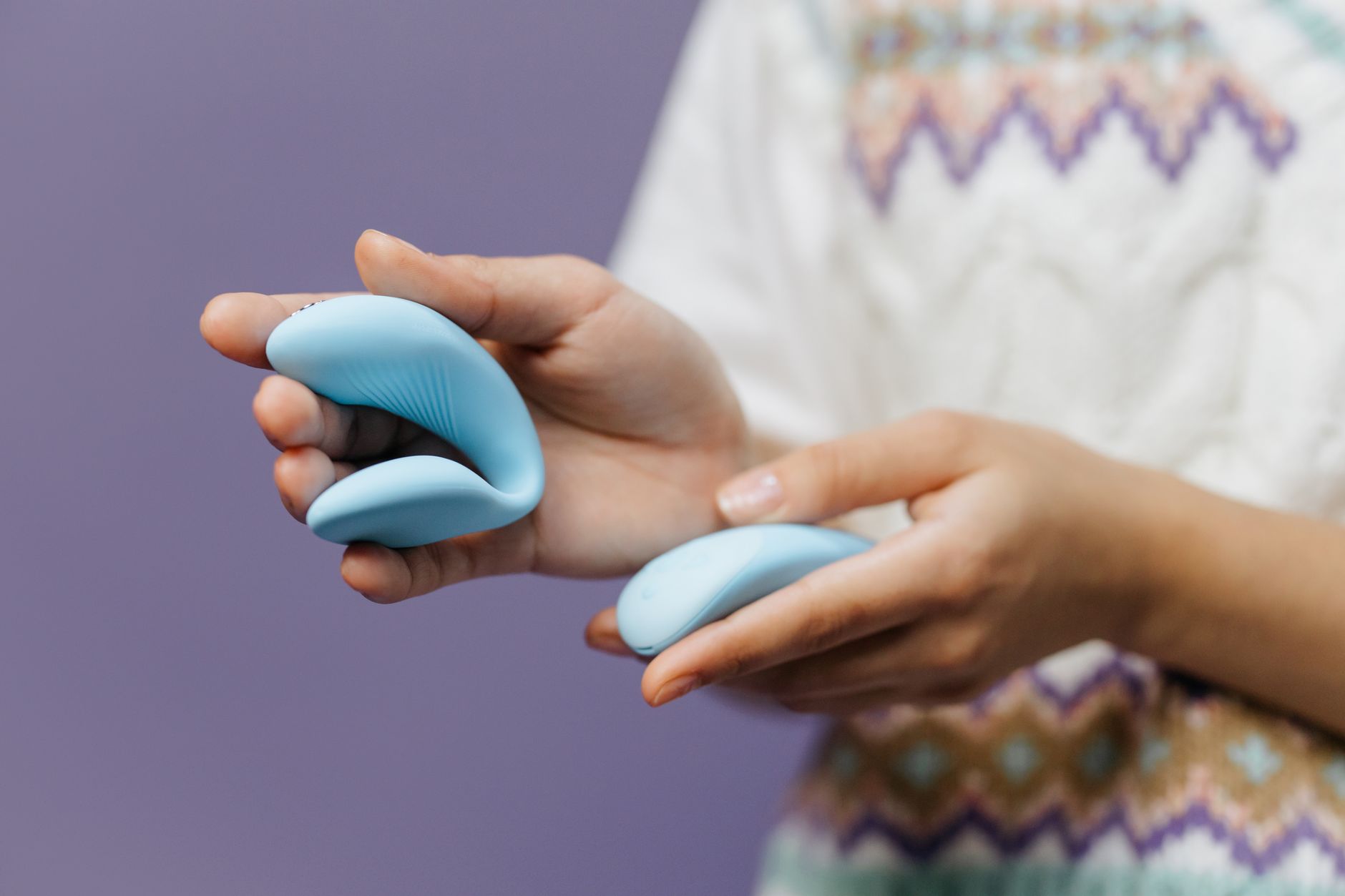
You want to feel good during sex with your partner. But the thought of actually showing them that you need a toy, or asking for what brings you pleasure, or (god forbid) using one while they're watching? It lands differently. It feels like admitting you're broken, or needy, or that they're not enough. It feels like a risk.
Here's the plot twist: that shame is doing way more damage to your sex life than any toy ever could. And a lemon vibrator is one of the fastest ways to dismantle it.
Most of us grow up with the idea that good sex is something that happens to us, not something we do or ask for. We're taught that the right partner should "just know" what we want. We internalize the message that needing help reaching orgasm is somehow a personal failure, not just... normal neurology.
Then there's the visual thing. Traditional vibrators can feel clinical, or porny, or like you're announcing something shameful to the room. There's a reason women describe using toys as feeling "weird" or "awkward" with a partner present. The device itself becomes a symbol of your desire, and desire still carries baggage.
A lemon clitoral vibrator changes the equation. It's elegant, discreet, and honestly beautiful to look at. Using one feels less like you're breaking a rule and more like you're using a sophisticated tool. Which you are.
Here's what I tell couples in therapy: your orgasm is not a gift you give your partner. It's feedback. When you reach orgasm reliably, you teach your nervous system that partnered sex is safe. You show your partner exactly what works. You become more present because you're not performing, you're actually experiencing.
Your partner gets better sex because you're no longer disappearing into your own head, monitoring whether you're "taking too long" or "being too loud" or "asking for too much."
Using a lemon vibrator with a partner isn't a workaround. It's communication.
Okay, so you want to introduce this. The shame is telling you this will be a major emotional event. It probably won't be.
Skip the preamble. Don't say "I need to talk to you about something really serious." That builds tension around something that isn't actually tense. Instead, normalize it. "I want to try using a vibrator together. I think it'll feel good." Full stop.
If your partner seems hesitant, the move is to ask what's underneath that. "Are you worried I won't enjoy sex without it?" "Are you concerned it means something about you?" Most hesitation evaporates when you actually name it. People are often fine with toys once they understand it's not a referendum on them.
If your partner is enthusiastic and you feel awkward anyway? That's okay. You can still go slowly. There's no timeline here.
First time using a lemon sucker with a partner, keep it simple. You're not performing. You're exploring.
Start with foreplay where you're already comfortable. Once you're aroused, introduce the toy like it's another hand or mouth. A clitoral vibrator works best when there's already blood flow to the area, so don't expect it to do all the work from the start.
If intercourse is happening, the lemon vibrator can stay right there on top of your clitoris during penetration. This is wildly effective for people who struggle to orgasm during traditional sex. You're not replacing anything. You're completing the circuit.
Honestly? The first time will feel strange. Your brain will be split between the sensation and the self-consciousness. That's normal. By the third time, your nervous system learns "this is okay, we're safe, we can relax." The shame voice gets quieter.
Sometimes self-consciousness about pleasure isn't really about shame. It's about numbness. If you're genuinely struggling to feel sensation during partnered sex, a lemon clitoral vibrator gives you back access to your own body. How to use a lemon vibrator for better sensation when you've never explored solo play covers this in detail, but the short version is: sensation often returns when you're not holding tension.
That tension frequently comes from trying to be "good" or "responsive" instead of just experiencing what's actually happening. A vibrator can pull your brain back into your body, especially if you've spent years disassociating from sex.
Not every partner will be enthusiastic about this. If yours actively resists the idea of you using a toy because it threatens them, that's information. It's not your job to make them comfortable with your pleasure. Your pleasure matters.
Good partners actually get curious about toys. They want to understand what works for you. They see it as a puzzle to solve together, not a failure on their part.
You don't have to go from "never mention pleasure" to "full conversation about orgasm." That's a fast track to more shame.
Instead, build it slowly. First time: just show them the toy before sex. "Hey, I want to try this." Second time: use it during foreplay, maybe ask for feedback. "Does this feel okay for you?" Third time: you're not thinking about it anymore. It's just part of your toolkit.
Every time you use it without shame, you rewire your own nervous system. Your brain learns "this is how I take care of my own pleasure" instead of "I'm broken for needing help."
The self-consciousness doesn't disappear because you've forced acceptance. It disappears because you've practiced owning your pleasure enough times that it stops feeling transgressive.
Here's what I see happen in my practice over and over: once someone actually experiences reliable pleasure with a partner, they can't go back. Not because the toy is magic. Because they've experienced what it feels like to be present during sex instead of performing.
That presence is addictive. It changes the whole relationship. Suddenly you want more of that. Suddenly your partner is wondering why you're more playful, more affectionate, less stressed. Suddenly sex is actually connecting instead of just happening.
The lemon vibrator didn't create any of that. You did. You just gave yourself permission to want something and ask for it. The toy was just the entry point.
Frame it as addition, not subtraction. "I want to explore what feels good to me" is different from "You're not doing this right." Most partners who feel defensive are actually worried they're failing at something. Reassurance helps. "I love having sex with you. I also want to experience my own body differently." That's honest and it's kind.
That can happen, especially the first few times. Your brain is learning that this is safe. If it's getting worse instead of better after three or four attempts, check in with what you're actually feeling underneath. Is it the vibrator itself, or is there something else going on in the relationship? Sometimes self-consciousness about pleasure is actually anxiety about intimacy in general. If that's your situation, slowing down and maybe talking to a therapist makes sense.
No. This is the lie the shame tells you. Attraction and pleasure are different systems. You can be wildly attracted to someone and still need clitoral stimulation to orgasm. You can love having sex with your partner and also love having a device that helps your body respond. These things aren't in competition.
Ask. "Are you genuinely comfortable with this or are you doing it for me?" A good partner will tell you the truth. If they need more time or more conversation, that's fine. You're building something together. It doesn't have to happen tonight.
Yes, if you want to. Or sometimes. Or never. Your pleasure isn't a menu you have to vary constantly. If it works, it works. Use it as much as feels right. The goal isn't to graduate away from the toy. The goal is to feel good and to feel connected to your partner. If the toy helps with both, keep using it.
You get to set that boundary. Or you can ease into it. You can hold the vibrator and your partner can hold your hand, or touch you somewhere else. Or you can use it solo first, then gradually move toward partnership. Your comfort level isn't something you push through. It's the speed limit for everything else.
Self-consciousness about pleasure usually isn't about the vibrator. It's about whether you believe you deserve pleasure in the first place. A lemon vibrator can help prove that you do. Not because the toy is special. Because using it, over and over, rewires the message you've been telling yourself.
You deserve to feel good during sex. You deserve to ask for what works. You deserve a partner who gets curious about your pleasure instead of threatened by it. A clitoral vibrator is just the tool that makes it easier to believe all three of those things.
If you're ready to start this conversation with your partner, or if you need support working through other barriers to pleasure, I'm here to help. Reach out at /contact.